
Multiple heat sources, one installation space
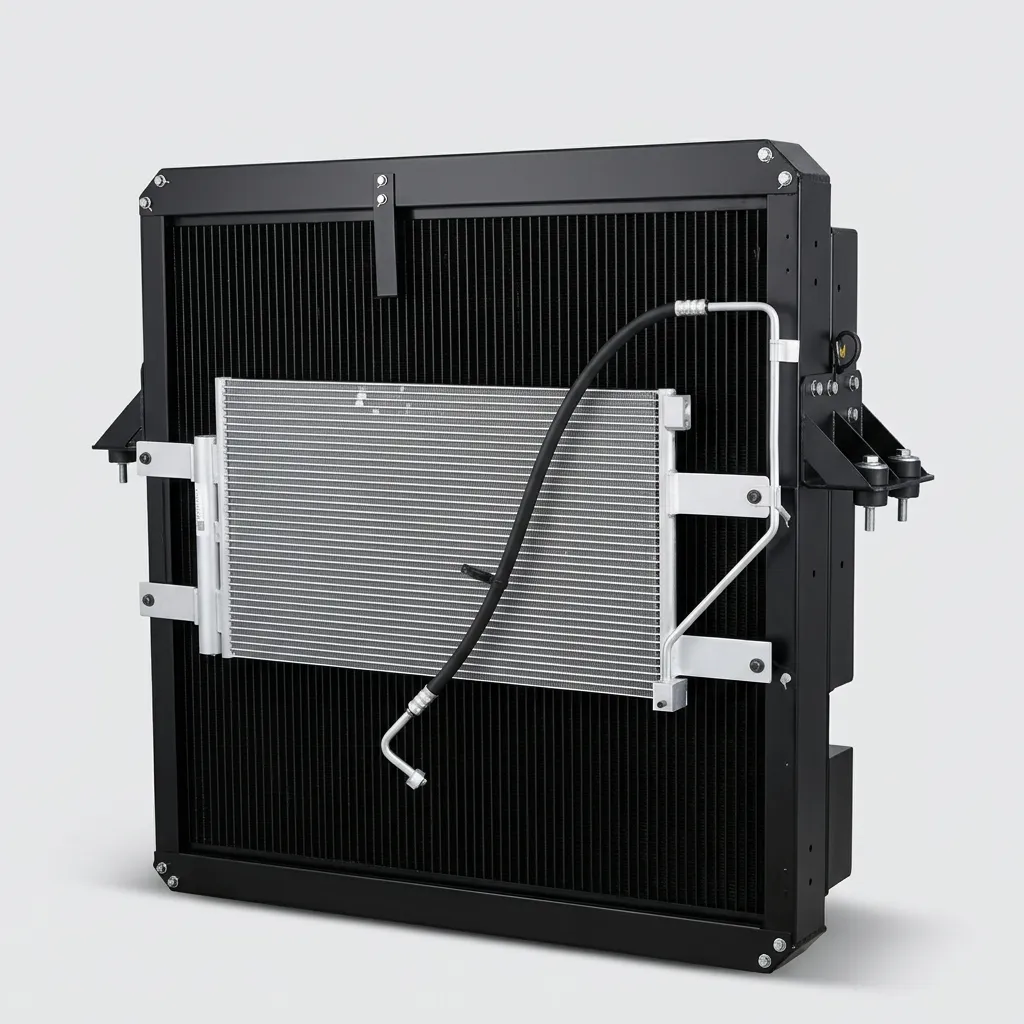
Construction equipment often needs to reject heat from engine coolant, hydraulic oil, charge air and sometimes transmission oil. Separate coolers can consume valuable space and require multiple frames, fans and guards. A combination cooler places two or more circuits in one assembly so the machine builder can manage airflow, mounting and service access as a coordinated thermal module.
Duty changes throughout the work cycle
An excavator, loader, roller or concrete mixer does not operate at one steady condition. Hydraulic load, engine speed, vehicle motion and ambient temperature change through the cycle. The design must consider low-speed high-load operation, partial fan speed, blocked screens, altitude and dust. A nominal heat load without duty-cycle context can produce a cooler that performs well only under easy conditions.
Balancing circuits and airflow
Each circuit has its own flow, temperature, pressure and allowable pressure drop, yet all sections compete for the same air. The order of cores in the airflow, fin density and fan curve influence total performance. The engineering review must account for air warmed by an upstream section, bypass paths around the core, guard restriction and hot-air recirculation inside the machine compartment.
Mechanical integration
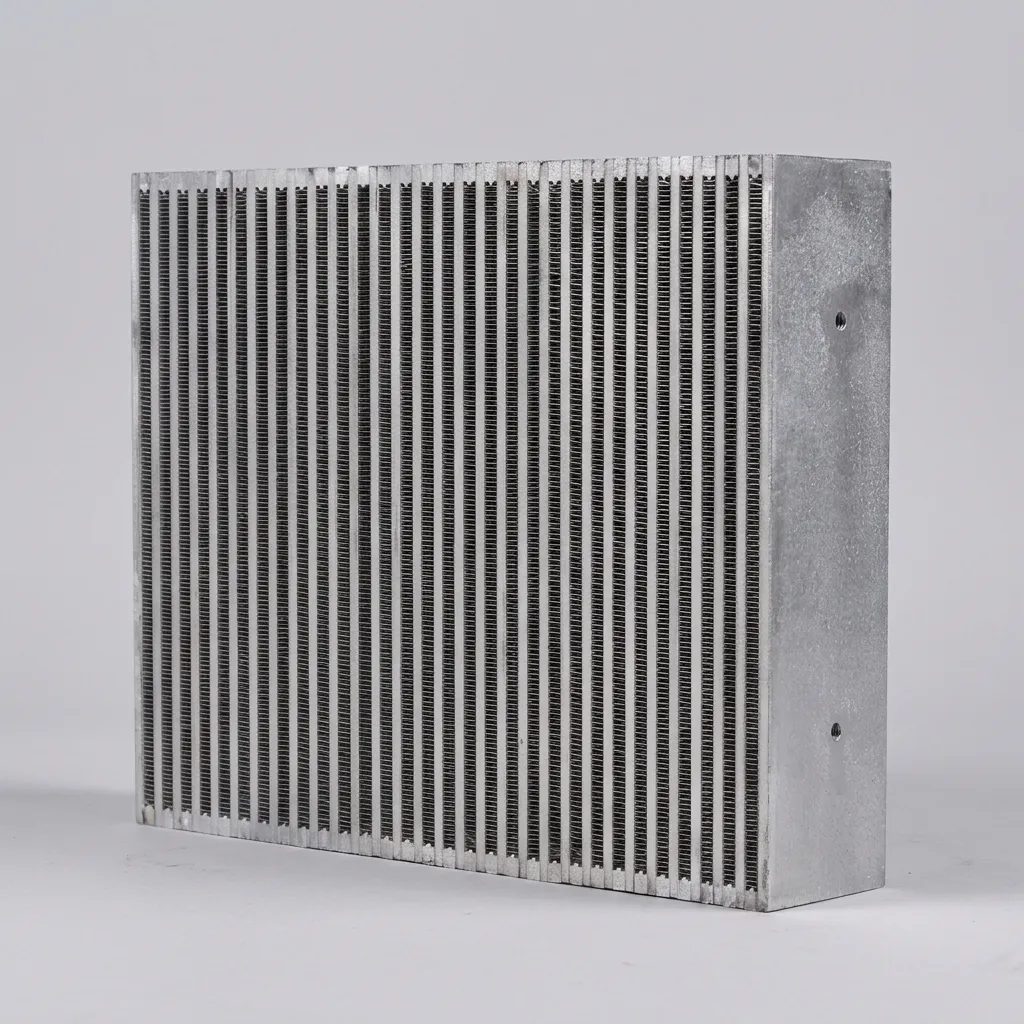
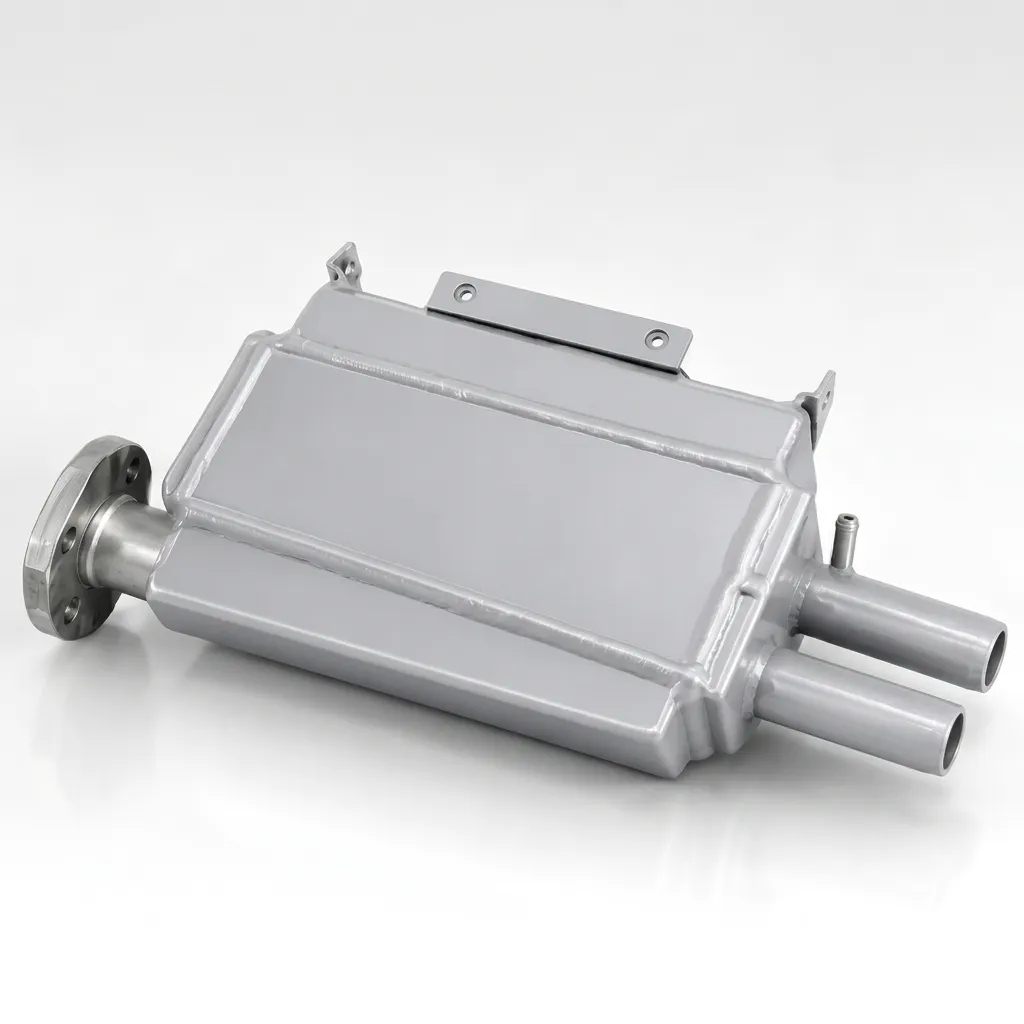
A complete module may include brazed aluminum cores, welded tanks, sheet-metal frame, fan and motor, protective guard, valves and mounting features. Drawings should define hose loads, mounting stiffness, vibration, electrical supply, service clearances and lifting or handling points. Corrosive or dusty environments may require coating, wider fin spacing or a cleaning plan.
Data for a custom quotation
Provide heat rejection, fluid and flow for each circuit; inlet and desired outlet temperatures; working and test pressures; allowable pressure drops; maximum ambient temperature; altitude; fan curve or airflow; voltage or hydraulic-motor data; installation envelope; ports; mounting points; protection requirements; prototype quantity and annual demand. A 3D envelope or existing sample can reduce interface errors.
From prototype to serial supply
Before serial production, agree the approved drawing, circuit identification, leakage tests, inspection records, finish, labelling and packing. The equipment manufacturer should test the prototype in the real machine over representative duty cycles. E&C can review OEM, replacement and contract-manufacturing projects using standard cores or a fully custom combination cooler.